The Subscription Economy Quietly Took Over Everyday Life |
Unlocking the secrets behind the rise of subscription services and how they're reshaping our world. |
There was a time when subscriptions were simple.
Maybe you had cable television. A newspaper. A gym membership you forgot to cancel.
Now? Monthly payments quietly follow us almost everywhere.
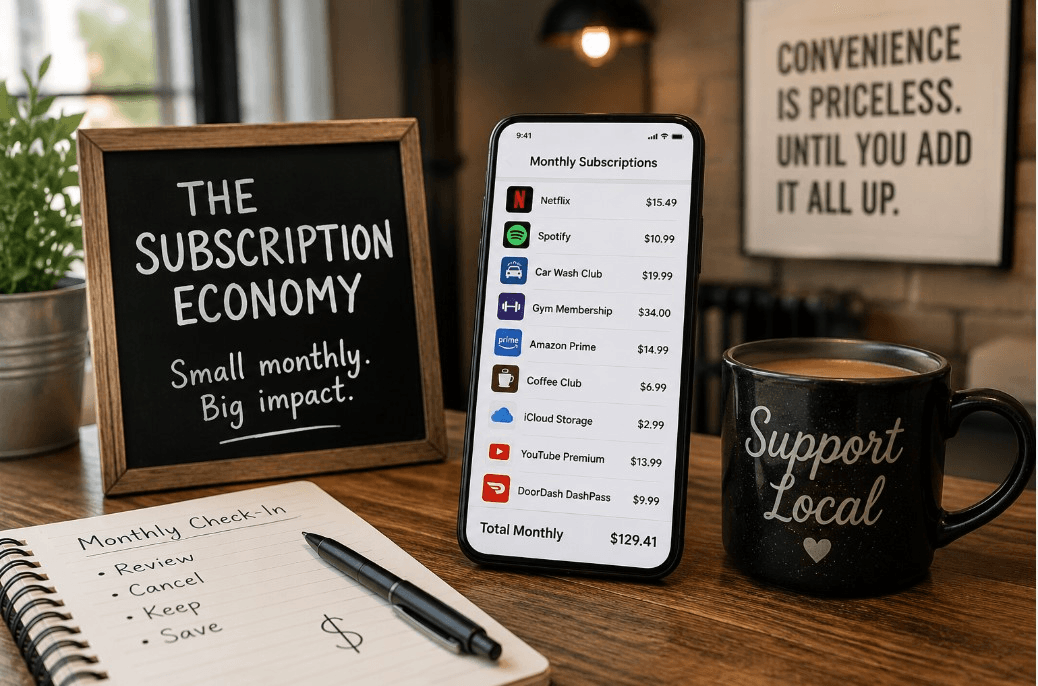
Streaming services. Music apps. Cloud storage. Coffee memberships. Car washes. Fitness programs. Delivery perks. Software tools. Warehouse clubs. Even restaurants and local businesses increasingly offer monthly “member” pricing.
And chances are, most people in Kalamazoo and Portage are spending far more on subscriptions than they realize.
The interesting part is how quickly this became normal.
A decade ago, people were cautious about recurring charges. Businesses had to convince customers to commit to ongoing payments.
Today, many consumers barely hesitate before adding another $9.99 or $29 monthly service if it promises convenience, savings, or simplicity.
Businesses love this model for obvious reasons.
Recurring revenue creates predictability. Instead of hoping customers return occasionally, companies can build stable monthly income streams. That consistency helps with staffing, growth planning, and long-term expansion.
That’s one reason membership-style businesses are suddenly everywhere.
Unlimited car wash plans have exploded across Southwest Michigan. Boutique fitness studios rely heavily on monthly memberships. Golf simulator lounges and entertainment venues increasingly use subscription-style access. Even coffee shops and restaurants are experimenting with loyalty systems designed to encourage repeat visits.
The shift isn’t just happening nationally—it’s showing up locally in very visible ways.
Consumers often justify subscriptions individually because each one seems relatively small. One streaming platform here. A warehouse membership there. Maybe a delivery app or premium phone storage plan. But stacked together, many households now carry dozens of recurring monthly charges operating quietly in the background.
At the same time, subscriptions also reflect changing consumer priorities.
People increasingly value access over ownership. Convenience over long-term commitment. Flexibility over permanence. That’s a major cultural shift.
Younger generations especially tend to think less in terms of “buying things forever” and more in terms of ongoing services that simplify life. Why own DVDs when you can stream? Why buy expensive fitness equipment when you can access a studio membership? Why pay individually for car washes when unlimited access feels easier?
Of course, there’s a downside too.
Many people are beginning to experience “subscription fatigue.” Monthly charges accumulate quietly until suddenly a household budget feels tighter than expected. It’s easy to underestimate how quickly small recurring payments grow into significant expenses over time.
Still, businesses continue leaning heavily into the model because it works.
And honestly, most consumers seem willing participants.
The subscription economy didn’t arrive all at once. It slipped into daily life gradually—one app, one membership, one convenience at a time.
Now it’s hard to imagine modern life without it. |
0 Comments
Join the conversation
Be the first to comment
Share your thoughts above.